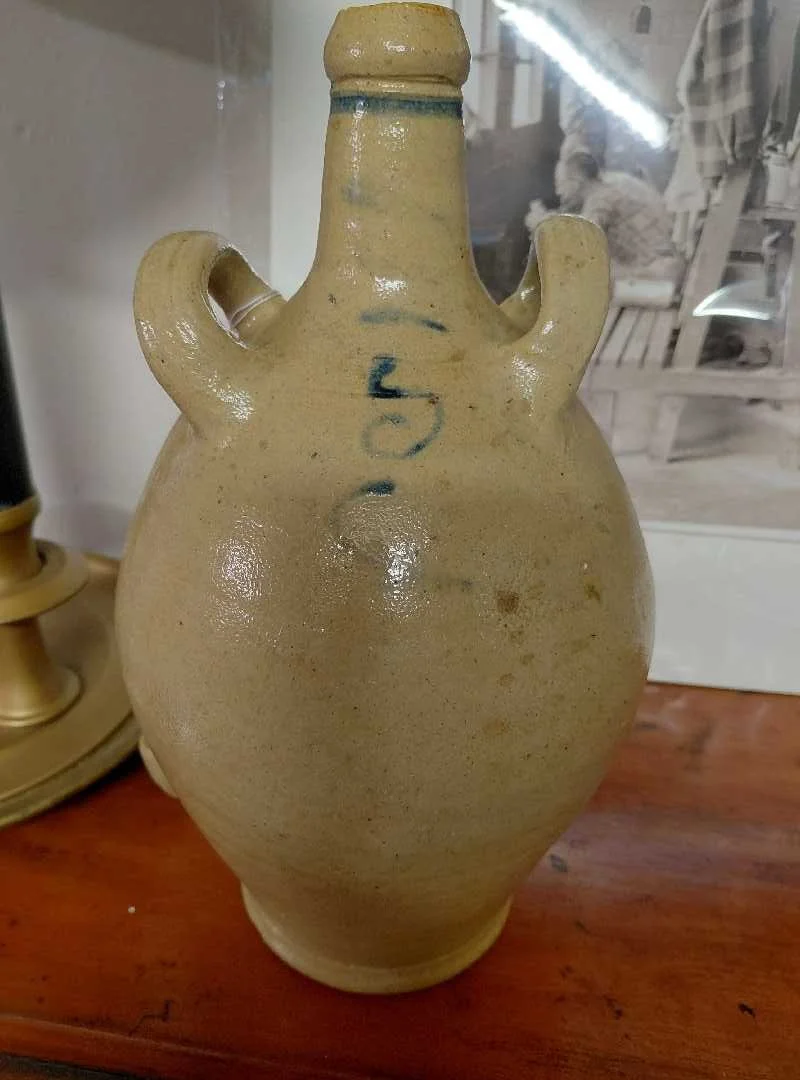
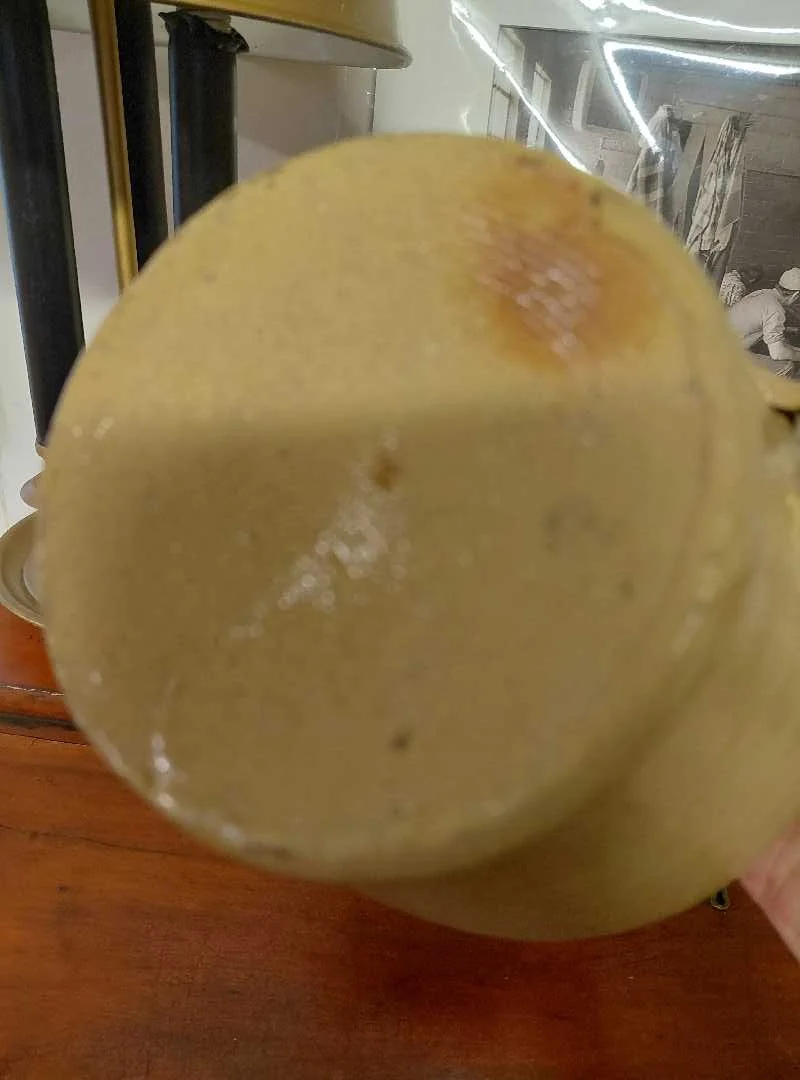
Material: Wheel-thrown stoneware with a salt glaze, tan / oatmeal color. The glossy, slightly pitted surface and the kiln scar on the bottom in your first photo are classic salt-glaze traits.
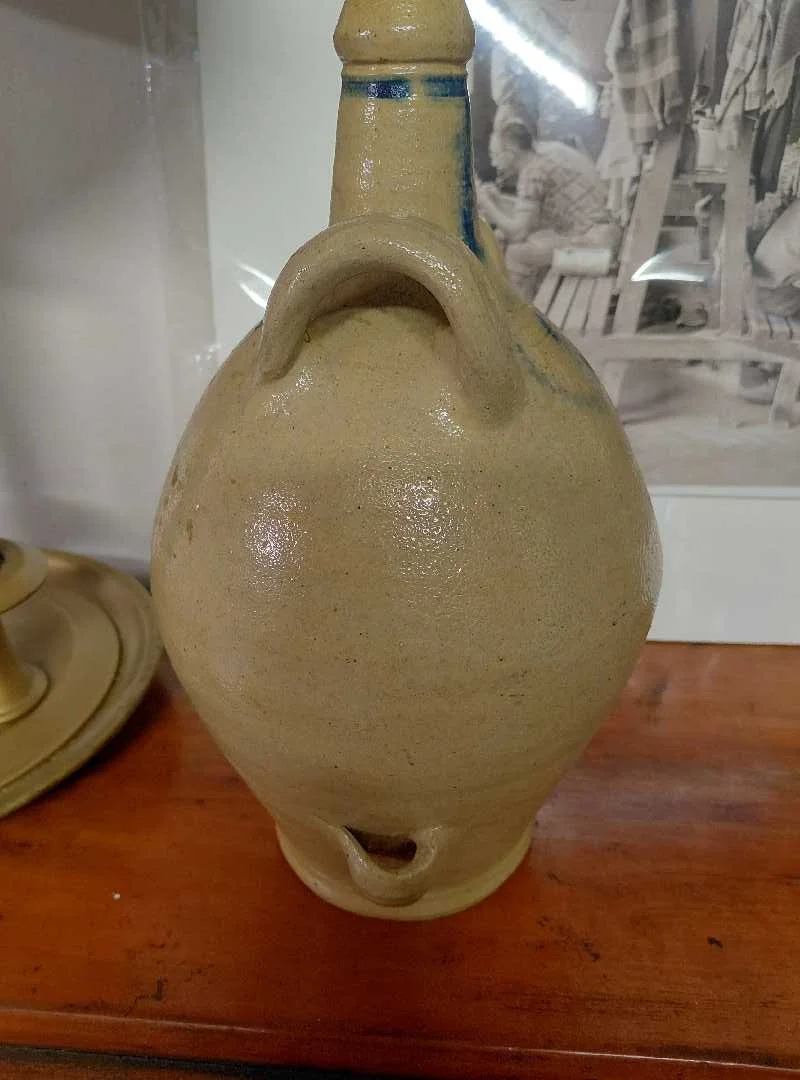
Form: Ovoid belly, tall narrow bottle neck with tooled lip, two small applied ear handles high on the shoulder for a wire bail / carrying rope, and the tiny loop at the foot you show in photo 2 is a lashing loop / foot handle used to tip it when pouring. That double shoulder + foot loop form is German, not American.
Decoration: Simple cobalt blue brushed decoration - a blue band around the neck and a freehand "5" on the shoulder. On German pieces that is usually a size / batch mark, not a US 5-gallon mark. Your jug would be far too small for 5 gallon.
Date: Circa 1860-1890. Made in the Westerwald region of Germany. These were made in huge numbers and exported as water bottles, then reused on American farms. Very similar examples are described as "German salt glazed stoneware mineral water jug 11-1/2"H" and "Antique 18C Stoneware Ovoid Jug Saltglaze... 11.5" by 4.5""
Salt glaze intact, no major cracks visible. Some cobalt wear, which is normal. The brown iron spots are kiln firing impurities, also normal.
Material: Wheel-thrown stoneware with a salt glaze, tan / oatmeal color. The glossy, slightly pitted surface and the kiln scar on the bottom in your first photo are classic salt-glaze traits.
Form: Ovoid belly, tall narrow bottle neck with tooled lip, two small applied ear handles high on the shoulder for a wire bail / carrying rope, and the tiny loop at the foot you show in photo 2 is a lashing loop / foot handle used to tip it when pouring. That double shoulder + foot loop form is German, not American.
Decoration: Simple cobalt blue brushed decoration - a blue band around the neck and a freehand "5" on the shoulder. On German pieces that is usually a size / batch mark, not a US 5-gallon mark. Your jug would be far too small for 5 gallon.
Date: Circa 1860-1890. Made in the Westerwald region of Germany. These were made in huge numbers and exported as water bottles, then reused on American farms. Very similar examples are described as "German salt glazed stoneware mineral water jug 11-1/2"H" and "Antique 18C Stoneware Ovoid Jug Saltglaze... 11.5" by 4.5""
Salt glaze intact, no major cracks visible. Some cobalt wear, which is normal. The brown iron spots are kiln firing impurities, also normal.